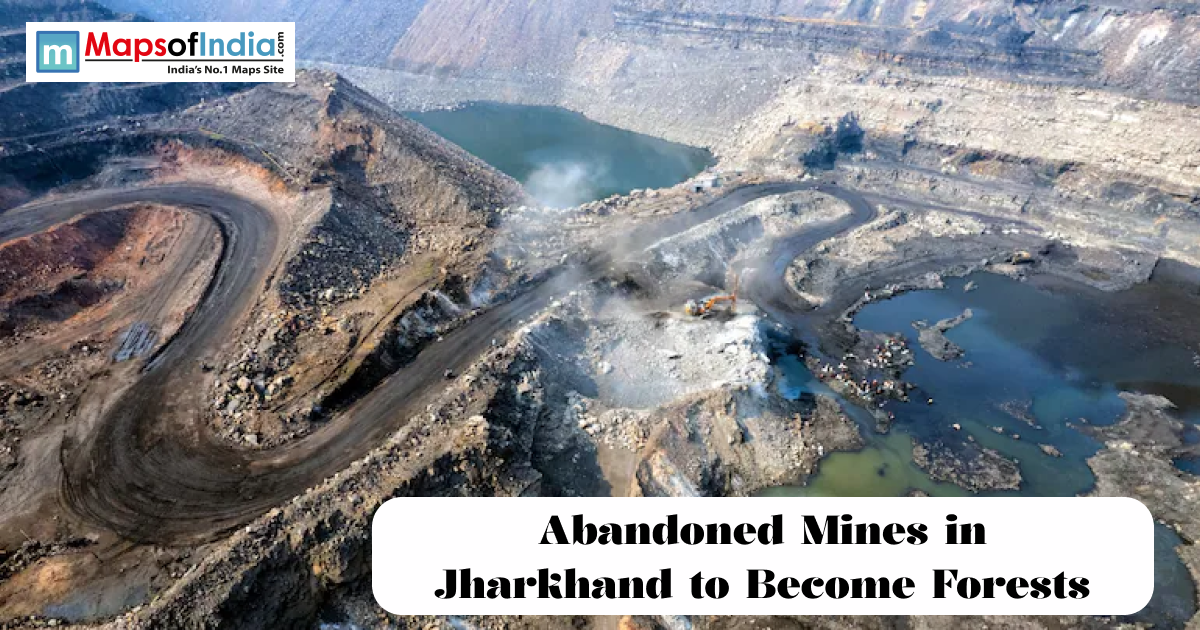
In Jharkhand, a massive environmental restoration initiative is being undertaken in which nearly 350 acres of the previous mines will be turned into lively forest ecosystems. The move is a major step towards restoring the devastated landscapes and improving sustainable development in one of the resource-rich states in India.
The land in question that had been used in intensive mining activities was now bare and ecologically degraded after the mining activities were stopped. These regions are usually characterized by soil erosion, biodiversity loss and environmental degradation in the long run. As a reaction, governments have initiated a systematic reclamation initiative in order to regain the natural equilibrium of these areas.
The key feature of the initiative is planting native tree species, especially sal and jamun. Sal trees are prevalent tree in the Jharkhand forests, and they are a very important tree in ensuring ecological stability. Jamun trees, however, do not just sustain wildlife, but also bring benefits to the local communities in terms of the economic and nutritional value of their fruit. The project will create a natural forest habitat and not an artificial plantation by focusing on native species.
There are several steps of reclamation. First, the land will be levelled and treated to overcome soil degradation. This involves incorporating organic matter and nutrients to enhance fertility, and also dealing with any remaining pollution caused by mining activities. As soon as the soil is stabilized, the plantation drives will be initiated, and long-term monitoring will be provided to make sure that the forests grow healthy.
Environmental professionals point out that such initiatives can go a long way towards carbon sequestration, which can help combat climate change. The re-established forests also enhance air and water quality, lower surface temperatures and provide the wild animals with new habitats that they may have lost as a result of mining.
The project will have a socio-economic impact that will be positive on top of environmental benefits. The local communities can get access to forest resources, plantation and maintenance work opportunities and even income in terms of non-timber forest products. Even the eco-tourism projects might be supported by the rebuilt regions in the long-term.
Jharkhand is a region that has been a centre of mining, especially coal, which has given a boost to the industry but has also created a significant ecological imprint. This reclamation initiative is an indication of a move towards a balance between economic activity and the environment.
When successful, the project would become an example to other similar projects in India of how to reclaim the degraded mining areas into viable green cover.